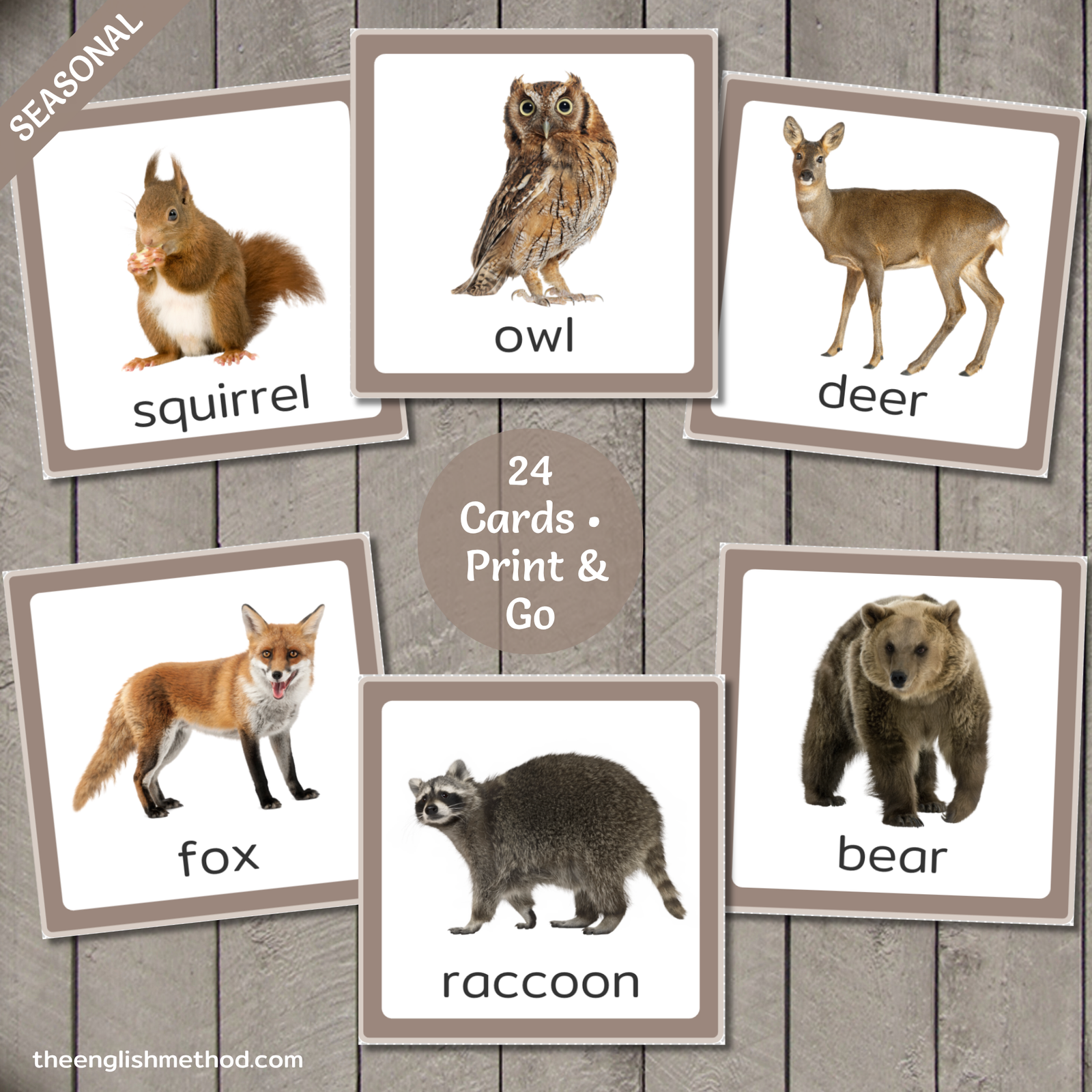
Build real-world woodland animal vocabulary with these Montessori-inspired vocabulary picture cards. Children learn to recognise and name woodland animals using clear real-photo images that support language development, word-picture recognition, and early science learning.
These vocabulary cards help children connect words to animals they may encounter in forests, woodlands, nature books, and wildlife habitats. Perfect for woodland themes and nature studies, supporting meaningful vocabulary through hands-on exploration.
Part of the Woodland Animals Study (full unit).
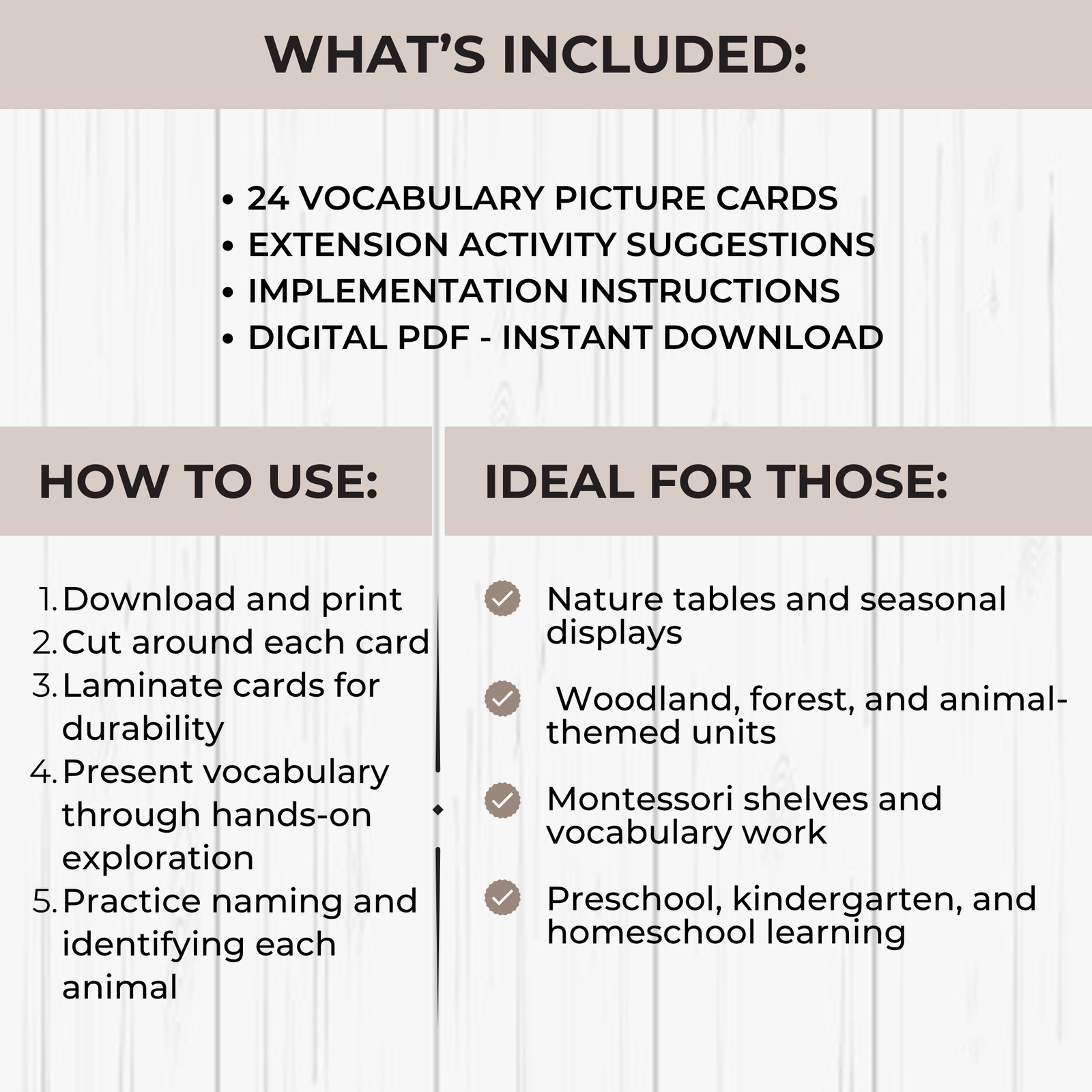
WHAT’S INCLUDED:
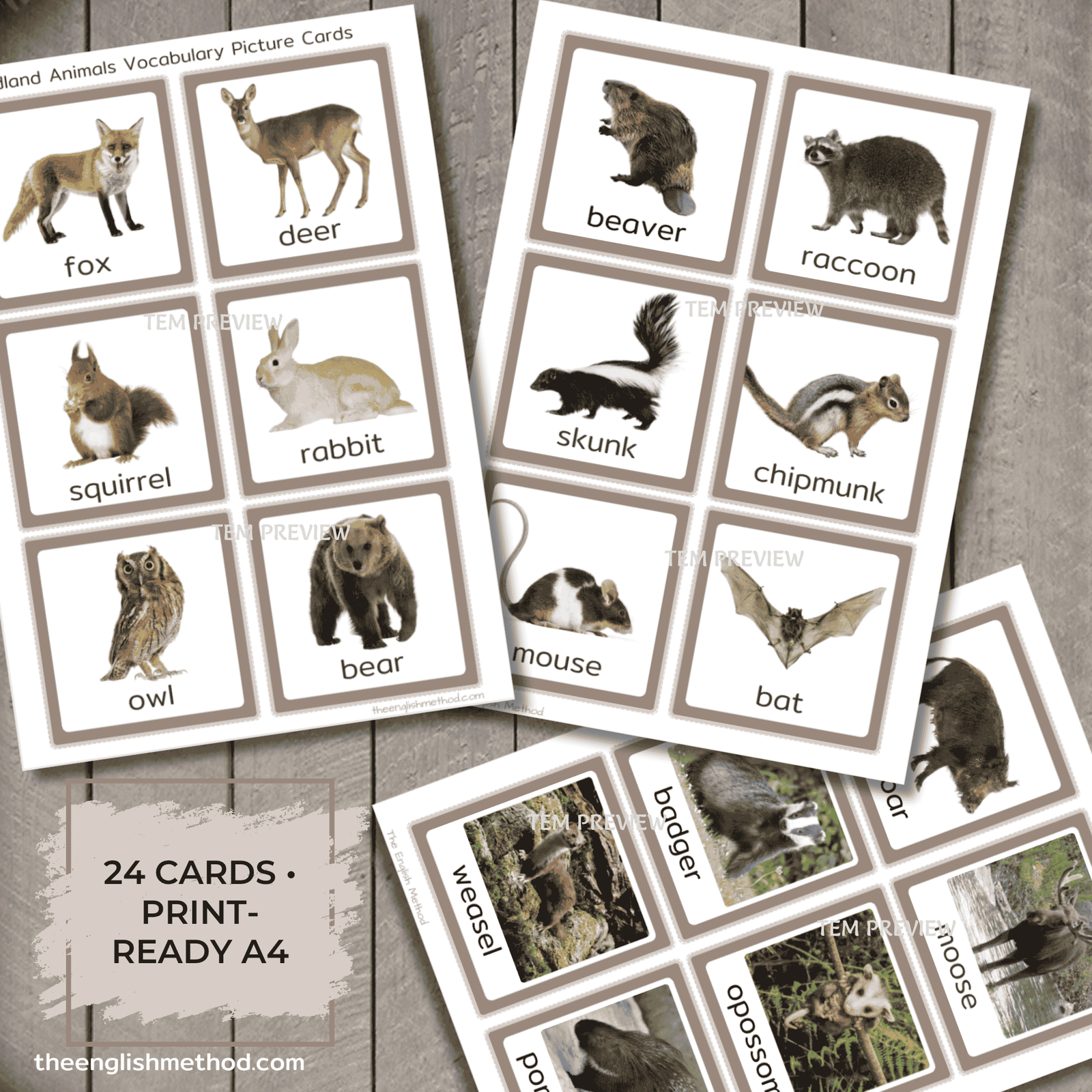
- 24 vocabulary picture cards (picture + word)
- Simple instructions
- Extension activity suggestions
- Digital PDF download
WOODLAND ANIMALS INCLUDED:
badger, bat, bear, beaver, bobcat, chipmunk, coyote, deer, fox, hedgehog, moose, mouse, opossum, otter, owl, porcupine, rabbit, raccoon, skunk, squirrel, weasel, wild boar, wolf, woodpecker
HOW TO USE:
- Introduce cards one at a time
- Name each animal clearly
- Encourage repetition and discussion
- Use for matching, sorting, or conversation
- Store in a tray for independent access
PERFECT FOR:
- Nature tables and seasonal displays
- Woodland, forest, and animal-themed units
- Montessori shelves and vocabulary work
- Preschool, kindergarten, and homeschool learning
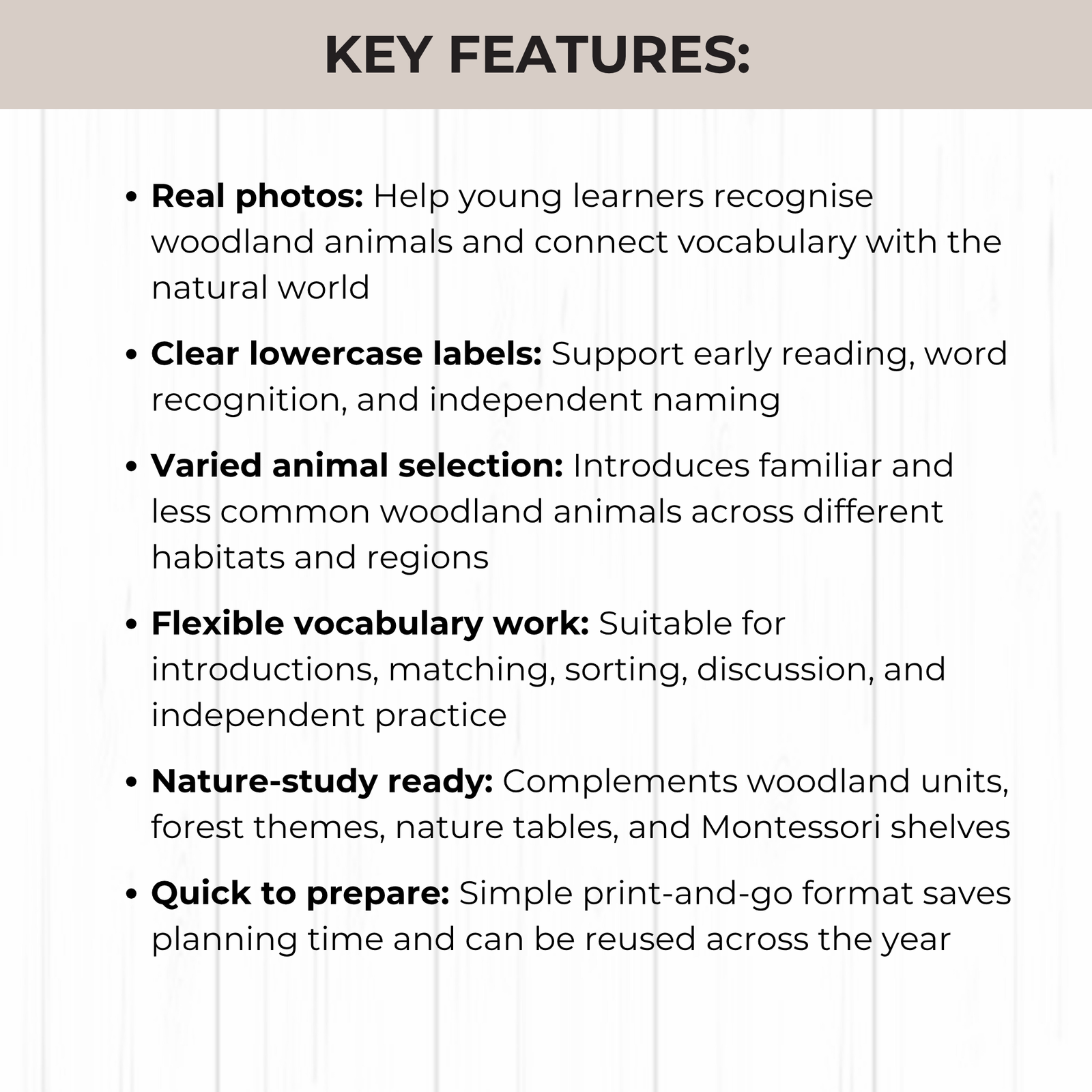
KEY FEATURES:
- Montessori-Inspired Design: Authentic photographs support independent, child-led learning and connect vocabulary to real woodland animals.
- Real Nature Vocabulary: Introduces familiar and less common woodland animals found in forests and natural habitats.
- Reading and Language Development: Builds meaningful vocabulary and supports early literacy skills.
- Observation Skills: Encourages children to notice animal features, habitats, and similarities through careful observation.
- Early Science Foundations: Introduces woodland wildlife and basic animal classification through exploration and discussion.
- Flexible Classroom Use: Suitable for centres, tray work, small groups, whole-class activities, or independent practice.