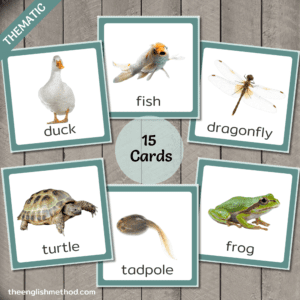
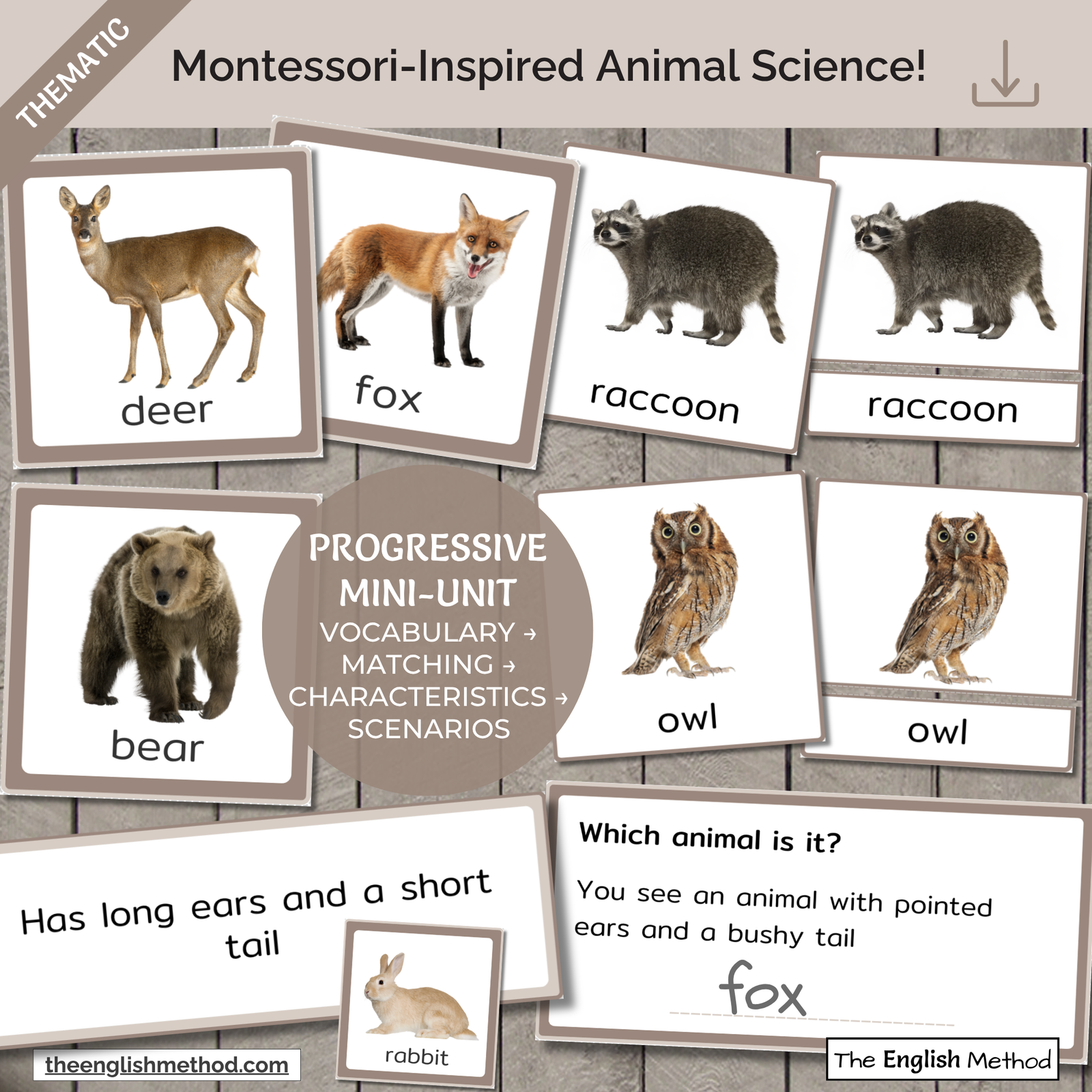
Build woodland animal vocabulary and early science skills with this comprehensive Woodland Animals Study, designed to support language development, observation, reading, and simple reasoning through hands-on, Montessori-inspired activities.
Using real photographs and a progressive learning structure, children explore familiar woodland animals while developing confidence through meaningful, repeatable learning materials.
This resource supports independent learning while introducing animal vocabulary and encouraging children to notice, compare, and identify common physical features.
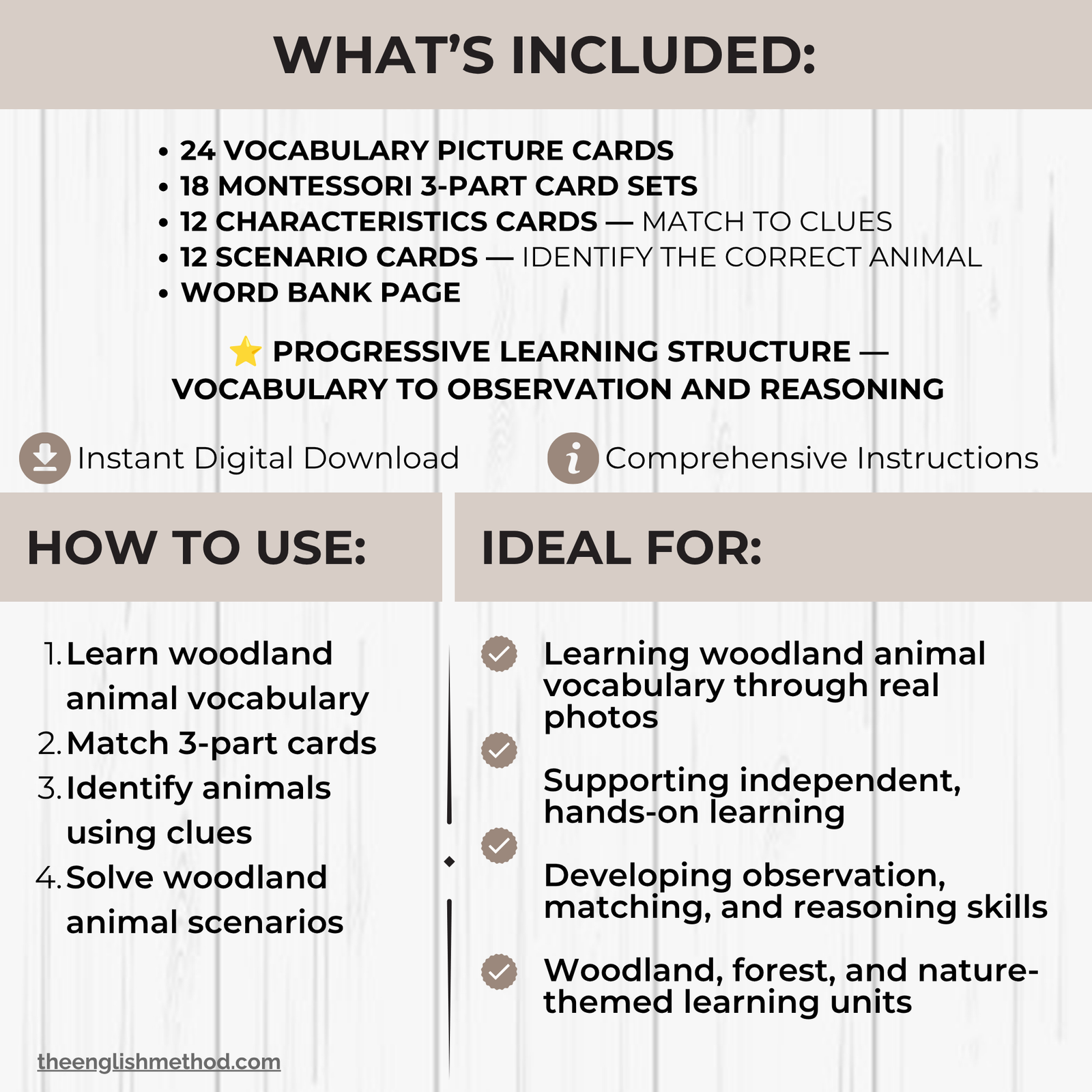
WHAT’S INCLUDED:
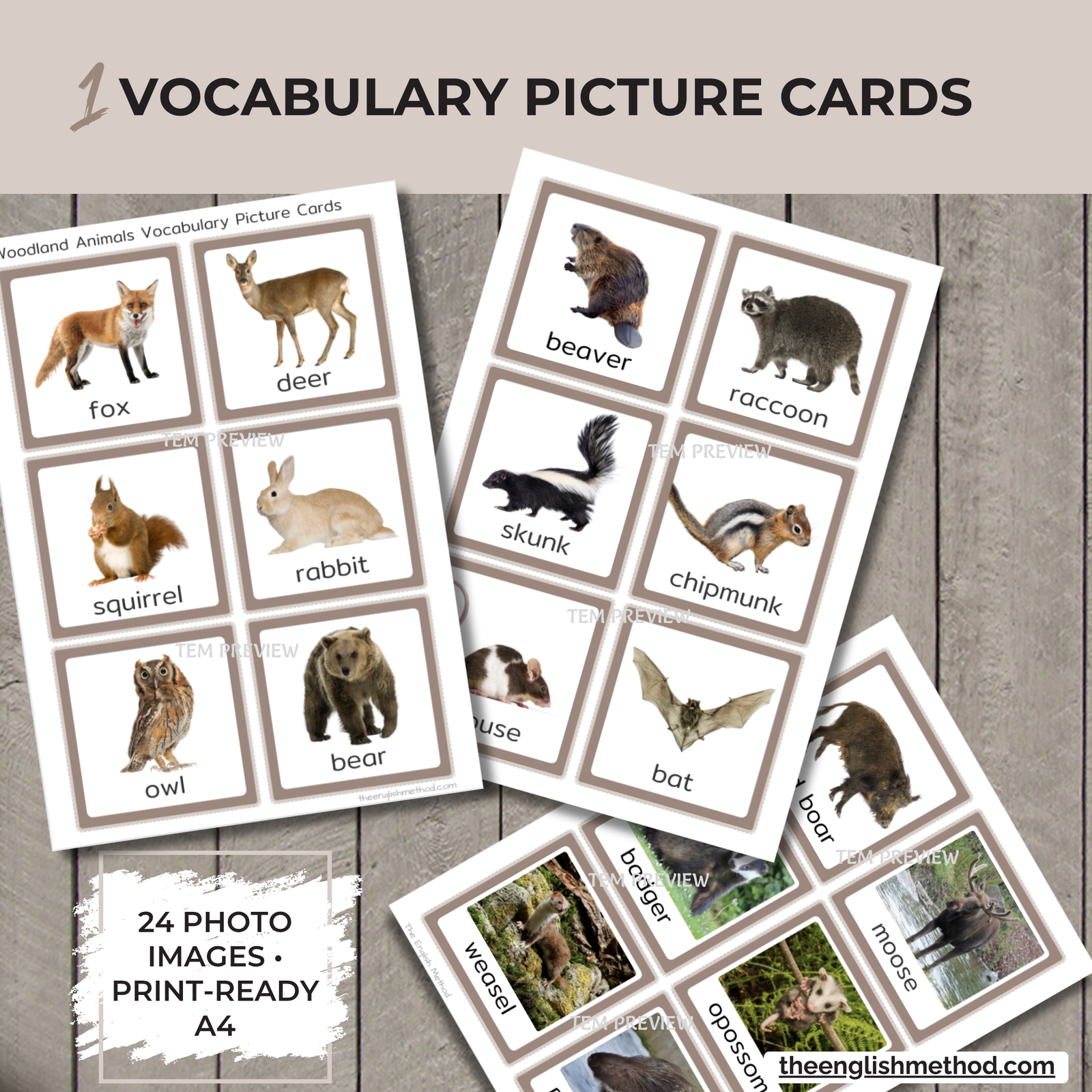
- 24 Vocabulary Picture Cards
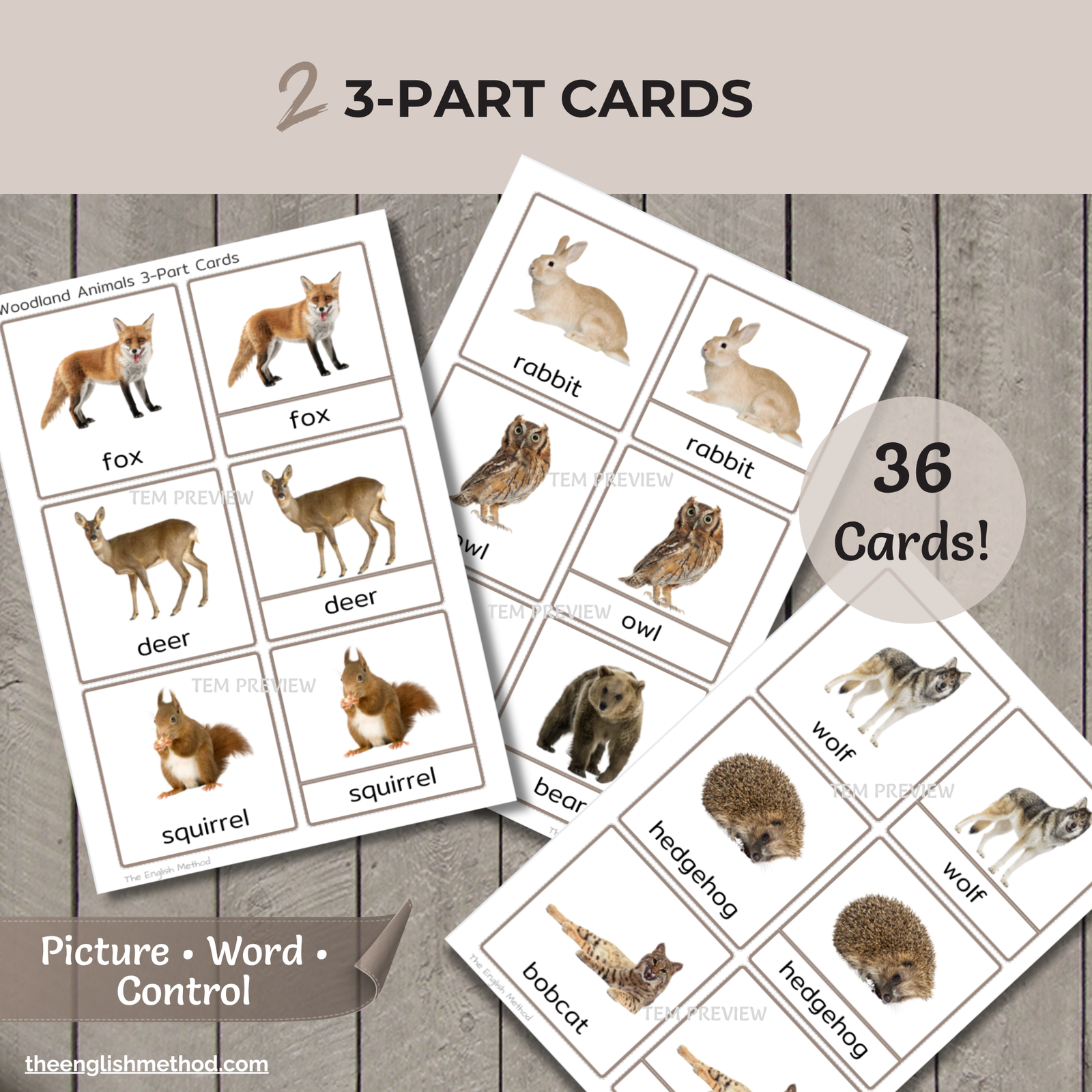
- 18 Montessori 3-Part Card Sets
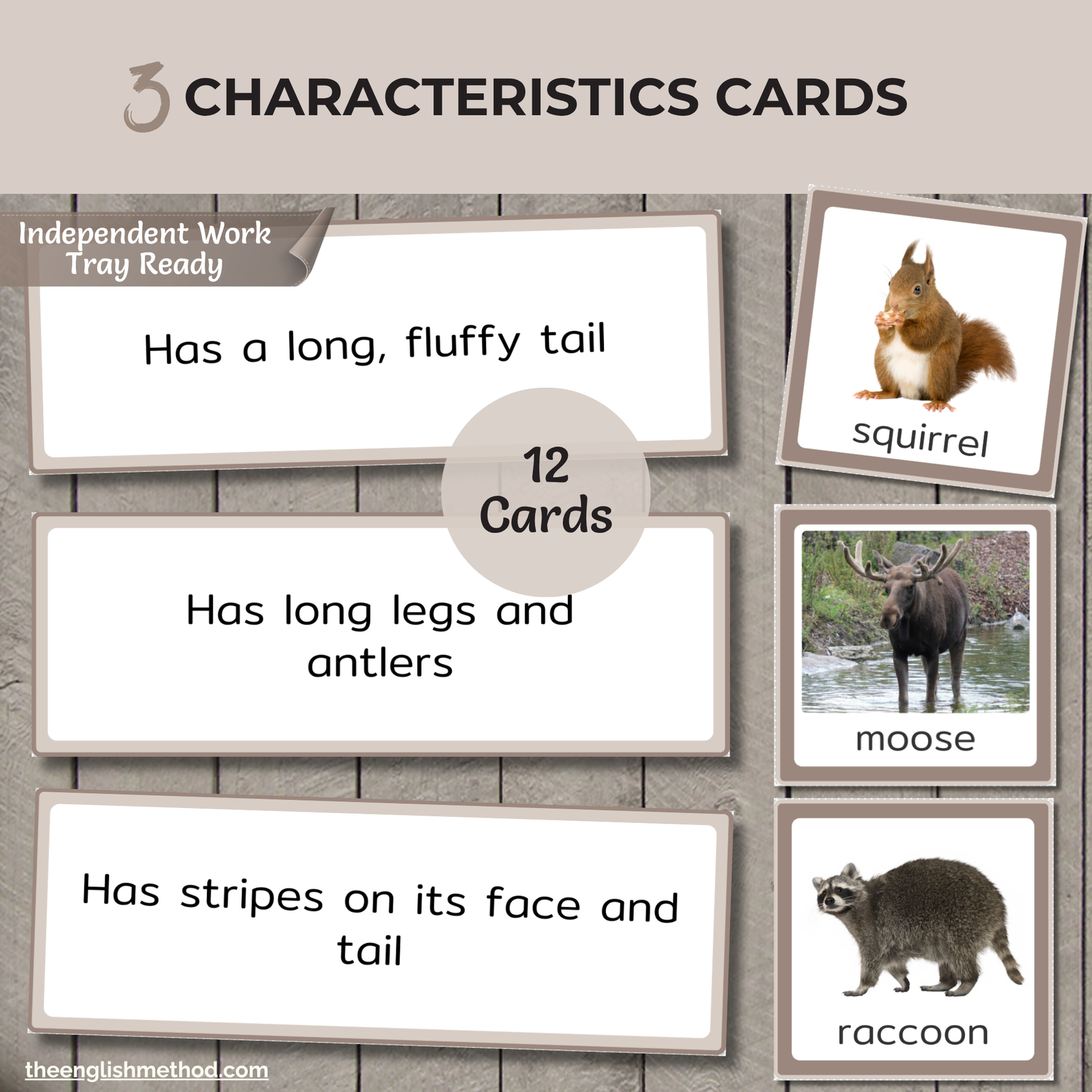
- 12 Characteristics Cards — match woodland animals to descriptive clues
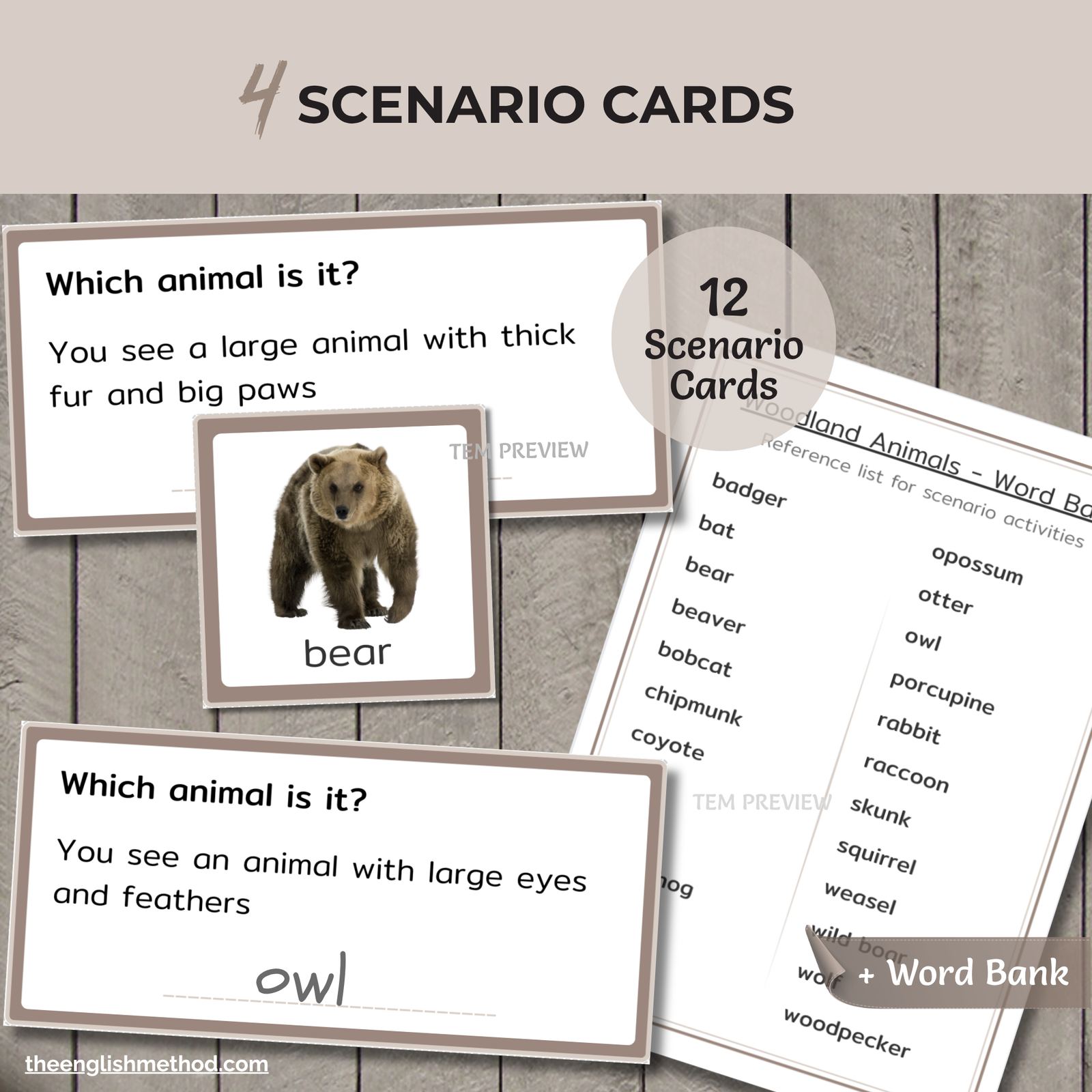
- 12 Scenario Cards — identify the correct animal using simple clues
- Word Bank
- Step-by-step instructions
- Digital PDF download
WOODLAND ANIMALS INCLUDED:
badger, bat, bear, beaver, bobcat, chipmunk, coyote, deer, fox, hedgehog, moose, mouse, opossum, otter, owl, porcupine, rabbit, raccoon, skunk, squirrel, weasel, wild boar, wolf, woodpecker
HOW TO USE:
- Download and print the materials
- Prepare cards by cutting and laminating for durability
- Introduce woodland animal vocabulary using real photographs
- Use the materials for matching, observation, reading, classification, and reasoning activities
- Encourage children to work independently once familiar
IDEAL FOR:
- Teaching woodland, forest, and nature topics
- Building animal vocabulary through real-world images
- Supporting independent, hands-on learning
- Developing observation, matching, reading, and reasoning skills
- Creating structured nature centres or tray work
EXTENDED FEATURES:
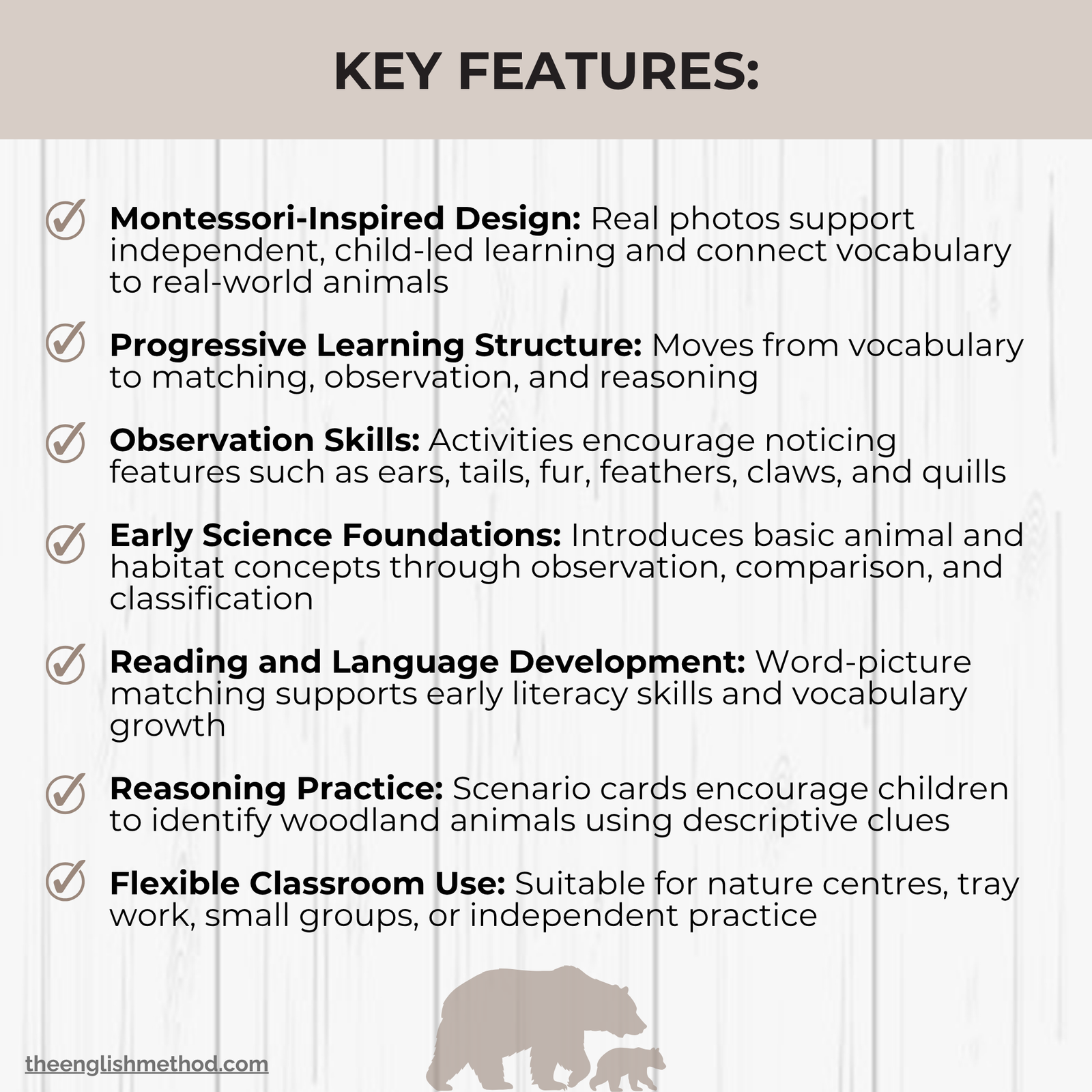
- Montessori-Inspired Design: Real photographs support independent, child-led learning and connect vocabulary to real-world animals
- Progressive Learning Structure: Moves from vocabulary to matching, observation, and reasoning
- Observation Skills: Activities encourage noticing features such as ears, tails, fur, feathers, claws, and quills
- Early Science Foundations: Introduces basic animal and habitat concepts through observation, comparison, and classification
- Reading and Language Development: Word-picture matching supports early literacy skills and vocabulary growth
- Reasoning Practice: Scenario cards encourage children to identify woodland animals using descriptive clues
- Flexible Classroom Use: Suitable for nature centres, tray work, small groups, or independent practice
- Low-Prep Implementation: Print, prepare, and use immediately
Perfect for woodland themes, forest units, nature studies, nature tables, and animal classification activities while building meaningful vocabulary through real-world connections.