Wiring the Brain for Reading: The Multi-Sensory Approach
- The English Method
- 16 May 2025
The journey to literacy begins with the fundamental building blocks of language: letters and their sounds. Learning to recognise, form, and connect letters with their corresponding sounds represents one of the most crucial developmental milestones in early childhood. Research consistently demonstrates that children build stronger neural connections when they engage multiple sensory pathways simultaneously during the learning process1. This multi-sensory approach to letter learning—incorporating visual, auditory, and kinaesthetic elements—creates robust neural networks that support literacy development across diverse learning styles and abilities.
The science behind multi-sensory learning provides compelling evidence for its effectiveness. When children see a letter (visual), hear its sound (auditory), and physically engage with its formation (kinaesthetic), they activate multiple brain regions simultaneously, creating stronger and more resilient neural pathways2. This integrated approach aligns perfectly with how young brains naturally process and retain information, making it an ideal methodology for early literacy instruction both in classroom and homeschool environments.
Table of Contents
Visual Learning Pathways: Seeing to Remember
The Brain's Visual Processing System
The visual cortex, located at the back of the brain, plays a crucial role in letter recognition. When a child views a letter, this area processes its shape, orientation, and distinguishing features. Research shows that the brain creates specialised neural networks specifically for letter recognition, which develop with repeated exposure3. These networks become increasingly efficient with practice, allowing children to quickly distinguish between similar-looking letters such as ‘b’ and ‘d’ or ‘p’ and ‘q’.
The visual pathway is particularly powerful because approximately 30% of the brain’s cortex is devoted to visual processing—more than all other senses combined4. This makes visual learning a significant component of literacy development, especially for children who demonstrate strong visual learning preferences.
From Recognition to Understanding
Visual discrimination—the ability to detect similarities and differences between visual stimuli—forms the foundation of letter recognition. Studies have shown that this skill directly correlates with reading readiness and future reading achievement5. When children engage with alphabet cards that feature both uppercase and lowercase letters, they develop crucial visual discrimination skills that allow them to:
- Identify distinctive features of each letter
- Differentiate between similar-looking letters
- Connect visual representations with phonetic sounds
- Recognise letters across different fonts and contexts
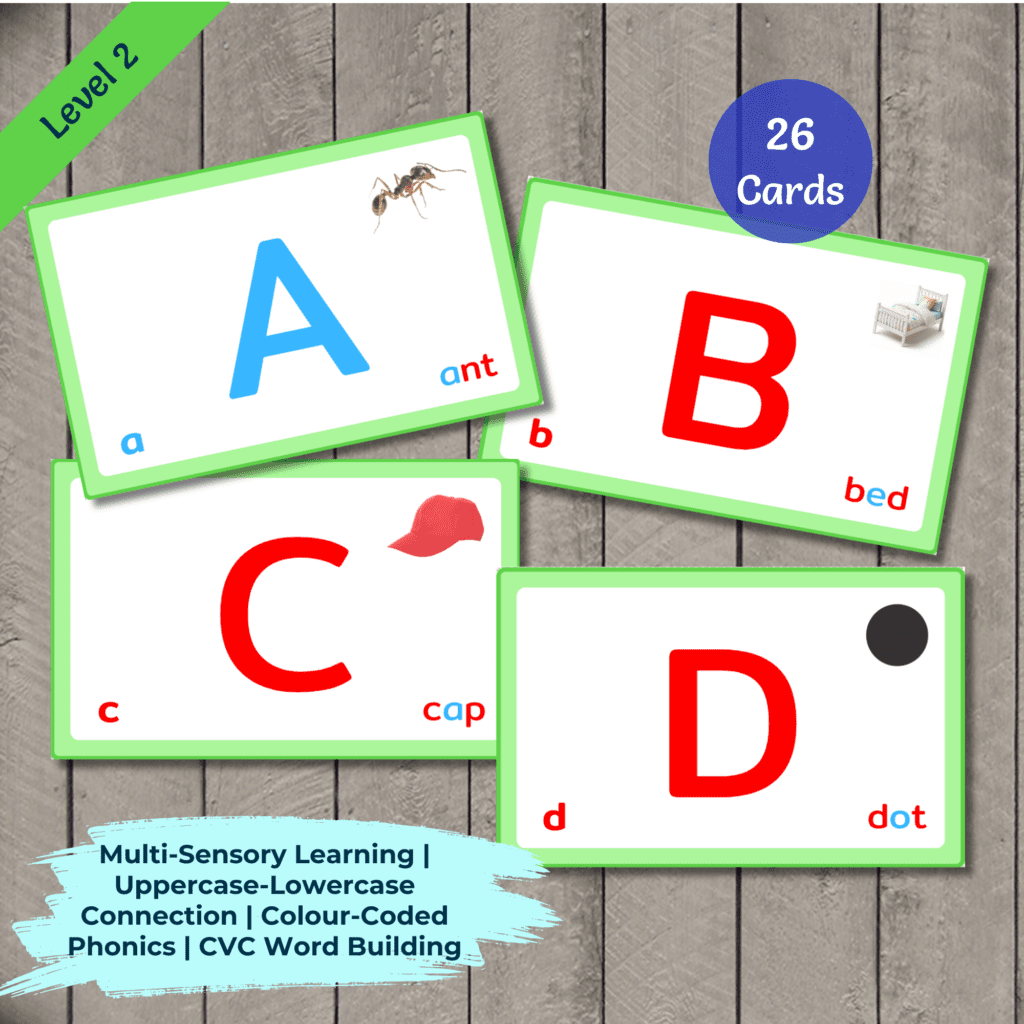
Our Alphabet Practice Cards support visual learning by pairing uppercase and lowercase letters together, reinforcing the visual connection between these different representations of the same letter. This visual pairing strengthens the neural networks responsible for letter recognition and helps children develop the flexibility to recognise letters in various contexts and formats.
Auditory Processing and Phonemic Awareness
The Sound-Symbol Connection
Phonemic awareness—the understanding that spoken words are made up of individual sounds (phonemes)—represents a critical skill in early literacy development. The auditory cortex, located in the temporal lobe, processes these speech sounds and forms connections with the visual representations of letters6. This integration of auditory and visual information creates the foundation for reading and writing.
Research consistently identifies phonemic awareness as one of the strongest predictors of reading success. Children who develop strong phonemic awareness skills typically become more proficient readers than those who struggle with these fundamental sound-based skills7. The ability to identify, isolate, and manipulate individual sounds in words forms a critical bridge between spoken and written language.
Segmenting: The Core Building Block
Segmenting—the process of breaking words down into individual phonemes—stands as perhaps the most critical phonemic awareness skill for early literacy development. When children can segment words into their component sounds, they can more easily map these sounds to their corresponding letters, facilitating both reading and spelling development8.
The process of segmenting engages multiple regions of the brain, including:
- The left inferior frontal gyrus (Broca’s area), responsible for speech production
- The left superior temporal gyrus, involved in sound processing
- The angular gyrus, which integrates visual and auditory information
When a child segments a word like ‘cat’ into its component sounds /c/ /a/ /t/, they are activating these brain regions and strengthening the neural connections between them. This neural activity creates a foundation for the alphabetic principle—the understanding that spoken sounds correspond to written letters9.
Kinaesthetic Learning and Memory
Movement and Memory Formation
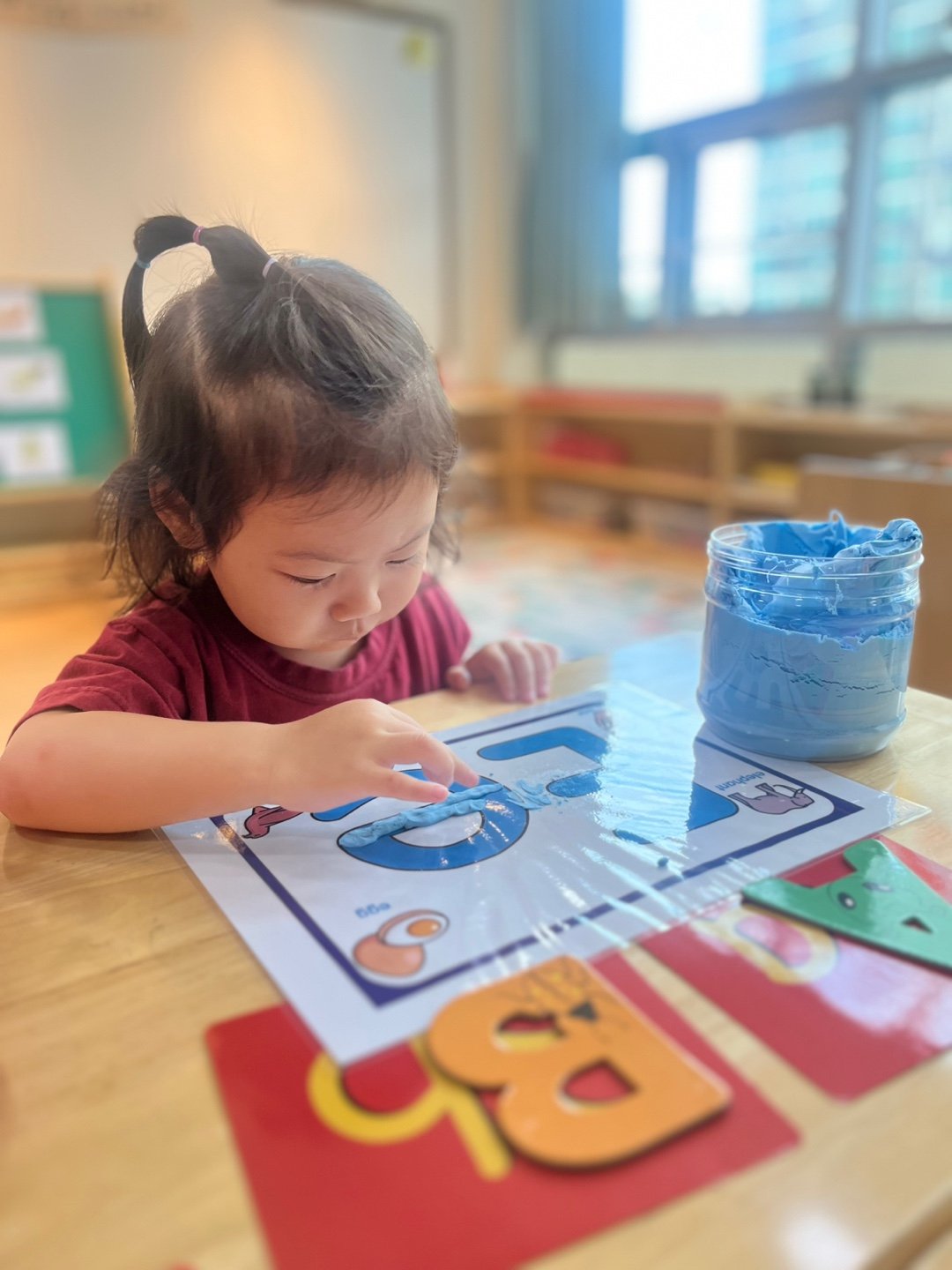
The kinaesthetic learning pathway involves physical movement and tactile sensations that engage the motor cortex and cerebellum. Research in cognitive neuroscience reveals that movement activates additional neural networks, creating stronger memory traces and enhancing information retention10. When children form letters with their bodies, trace them with their fingers, or manipulate tactile materials to create letter shapes, they engage these powerful motor pathways.
The incorporation of movement in learning capitalises on the brain’s procedural memory system, which creates robust, long-lasting memories through physical action. Studies indicate that information learned through movement is often retained more effectively than information acquired through passive observation alone11.
The Power of Muscle Memory
Physical engagement with letter formation creates muscle memory—a type of procedural memory that helps the body remember specific motions. This muscle memory becomes automated with practice, freeing cognitive resources for higher-level literacy tasks12. The integration of movement into letter learning offers several key benefits:
- Enhanced memory consolidation
- Improved focus and attention
- Greater engagement with learning materials
- Increased retention of letter shapes and orientations
- Development of fine motor skills necessary for writing
Bringing It All Together: Segmenting as a Multi-Sensory Activity
The Integration of Multiple Pathways
Segmenting activities that incorporate visual, auditory, and kinaesthetic elements create powerful learning experiences by engaging multiple brain regions simultaneously. This integrated approach strengthens the neural connections between these regions, creating a robust foundation for literacy development14.
A multi-sensory approach to segmenting might include:
- Visual elements: Using alphabet cards to represent sounds
- Auditory elements: Pronouncing each sound clearly and distinctly
- Kinaesthetic elements: Tapping, clapping, or moving in some way to represent each sound
When these elements work together, they reinforce each other and accommodate different learning preferences, ensuring that all children can access the content regardless of their primary learning modality15.
Step-by-Step Guide to Multi-Sensory Segmenting
Effective multi-sensory segmenting activities follow a structured approach that progressively builds skills:
- Begin with sound awareness: Have children listen for and identify the target sound in words
- Add visual representation: Introduce alphabet cards that represent each sound
- Incorporate movement: Teach specific actions associated with each letter/sound
- Practice segmenting: Break simple words into individual sounds using cards and movements
- Blend back together: Reassemble the sounds into whole words
This progression allows children to develop a comprehensive understanding of the relationship between sounds and letters while engaging multiple sensory pathways16.
Sample Activities for Home and Classroom
Effective multi-sensory segmenting activities might include:
- Sound Tapping: Children tap a finger for each sound in a word while saying the sounds aloud
- Letter Card Sequencing: Children place alphabet cards in order to represent the sounds in a word
- Movement Mapping: Children take a step or jump for each sound in a word
- Tactile Formation: Children write letters in the air with their finger while saying their sounds
These activities engage visual, auditory, and kinaesthetic pathways simultaneously, creating stronger neural connections and enhancing learning outcomes17.
Research Corner: The Evidence Base for Multi-Sensory Learning
Key Research Findings
The effectiveness of multi-sensory approaches to literacy instruction is supported by a substantial body of research:
- A meta-analysis by the National Reading Panel found that instruction in phonemic awareness combined with letter-sound teaching leads to significant improvements in reading and spelling abilities18.
- Neuroimaging studies reveal that multi-sensory learning activates more brain regions than single-modality approaches, creating stronger and more resilient neural networks19.
- Longitudinal studies indicate that early intervention with multi-sensory phonics instruction produces significant long-term benefits for reading achievement20.
Expert Perspectives
Education and neuroscience experts consistently advocate for multi-sensory approaches to early literacy:
‘The integration of visual, auditory, and kinaesthetic pathways creates optimal conditions for learning. When children engage multiple senses simultaneously, they form stronger neural connections that support literacy development.’ — Dr. Stanislas Dehaene, neuroscientist and author of “Reading in the Brain”21
‘Multi-sensory teaching techniques are effective for all learners, not just those with learning differences. By engaging multiple pathways to the brain, we can help all children develop stronger literacy skills.’ — Dr. Sally Shaywitz, neuroscientist and co-director of the Yale Center for Dyslexia & Creativity22
Conclusion
The science behind multi-sensory letter learning provides compelling evidence for its effectiveness in developing strong literacy foundations. By engaging visual, auditory, and kinaesthetic pathways simultaneously, this approach creates robust neural networks that support letter recognition, phonemic awareness, and ultimately, reading and writing development.
Your Alphabet Sound Action Cards (Level 1: lowercase, picture, sound, action) and Alphabet Cards (Level 2: uppercase letter, lowercase letter, picture, CVC word, colour-coded letters) exemplify this multi-sensory approach by offering children multiple ways to engage with letter learning. The integration of visual elements (uppercase and lowercase letters, pictures), auditory components (letter sounds), and kinaesthetic activities (sound actions) creates a comprehensive learning system that accommodates diverse learning preferences and maximises learning outcomes.
By incorporating these carefully designed multi-sensory cards into daily literacy activities, parents and educators can help children build the neural foundations for reading success. These approaches not only enhance learning efficiency but also make the journey to literacy more engaging, accessible, and enjoyable for all children.
References
- Shams, L., & Seitz, A. R. (2008). Benefits of multisensory learning. Trends in Cognitive Sciences, 12(11), 411-417.
- Dehaene, S. (2009). Reading in the brain: The new science of how we read. Penguin.
- James, K. H. (2017). The importance of handwriting experience on the development of the literate brain. Current Directions in Psychological Science, 26(6), 502-508.
- Medina, J. (2014). Brain rules: 12 principles for surviving and thriving at work, home, and school. Pear Press.
- Lonigan, C. J., Burgess, S. R., & Anthony, J. L. (2000). Development of emergent literacy and early reading skills in preschool children: Evidence from a latent-variable longitudinal study. Developmental Psychology, 36(5), 596-613.
- Blomert, L. (2011). The neural signature of orthographic-phonological binding in successful and failing reading development. NeuroImage, 57(3), 695-703.
- National Reading Panel. (2000). Teaching children to read: An evidence-based assessment of the scientific research literature on reading and its implications for reading instruction. National Institute of Child Health and Human Development.
- Kilpatrick, D. A. (2015). Essentials of assessing, preventing, and overcoming reading difficulties. John Wiley & Sons.
- Ehri, L. C. (2005). Learning to read words: Theory, findings, and issues. Scientific Studies of Reading, 9(2), 167-188.
- Bara, F., Gentaz, E., & Colé, P. (2007). Haptics in learning to read with children from low socio-economic status families. British Journal of Developmental Psychology, 25(4), 643-663.
- Longcamp, M., Zerbato-Poudou, M. T., & Velay, J. L. (2005). The influence of writing practice on letter recognition in preschool children: A comparison between handwriting and typing. Acta Psychologica, 119(1), 67-79.
- James, K. H., & Engelhardt, L. (2012). The effects of handwriting experience on functional brain development in pre-literate children. Trends in Neuroscience and Education, 1(1), 32-42.
- Labat, H., Ecalle, J., Baldy, R., & Magnan, A. (2014). How can low-skilled 5-year-old children benefit from multisensory training on the acquisition of the alphabetic principle? Learning and Individual Differences, 29, 106-113.
- Oakland, T., Black, J. L., Stanford, G., Nussbaum, N. L., & Balise, R. R. (1998). An evaluation of the dyslexia training program: A multisensory method for promoting reading in students with reading disabilities. Journal of Learning Disabilities, 31(2), 140-147.
- Gillingham, A., & Stillman, B. W. (1997). The Gillingham manual: Remedial training for children with specific disability in reading, spelling, and penmanship (8th ed.). Educators Publishing Service.
- Shaywitz, S. E. (2003). Overcoming dyslexia: A new and complete science-based program for reading problems at any level. Alfred A. Knopf.
- International Dyslexia Association. (2020). Multisensory structured language teaching fact sheet. Baltimore, MD: IDA.
- National Reading Panel. (2000). Report of the National Reading Panel: Teaching children to read: An evidence-based assessment of the scientific research literature on reading and its implications for reading instruction: Reports of the subgroups. National Institute of Child Health and Human Development.
- Willis, J. (2008). Building a bridge from neuroscience to the classroom. Phi Delta Kappan, 89(6), 424-427.
- Snowling, M. J., & Hulme, C. (2011). Evidence-based interventions for reading and language difficulties: Creating a virtuous circle. British Journal of Educational Psychology, 81(1), 1-23.
- Dehaene, S. (2013). Inside the letterbox: How literacy transforms the human brain. Cerebrum, 7.
- Shaywitz, S. E., & Shaywitz, B. A. (2008). Paying attention to reading: The neurobiology of reading and dyslexia. Development and Psychopathology, 20(4), 1329-1349.
© 2026 All Rights Reserved.