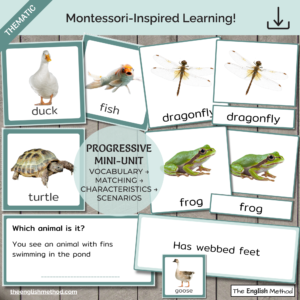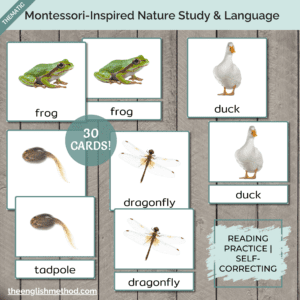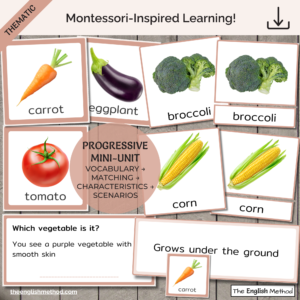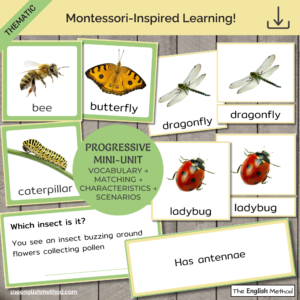
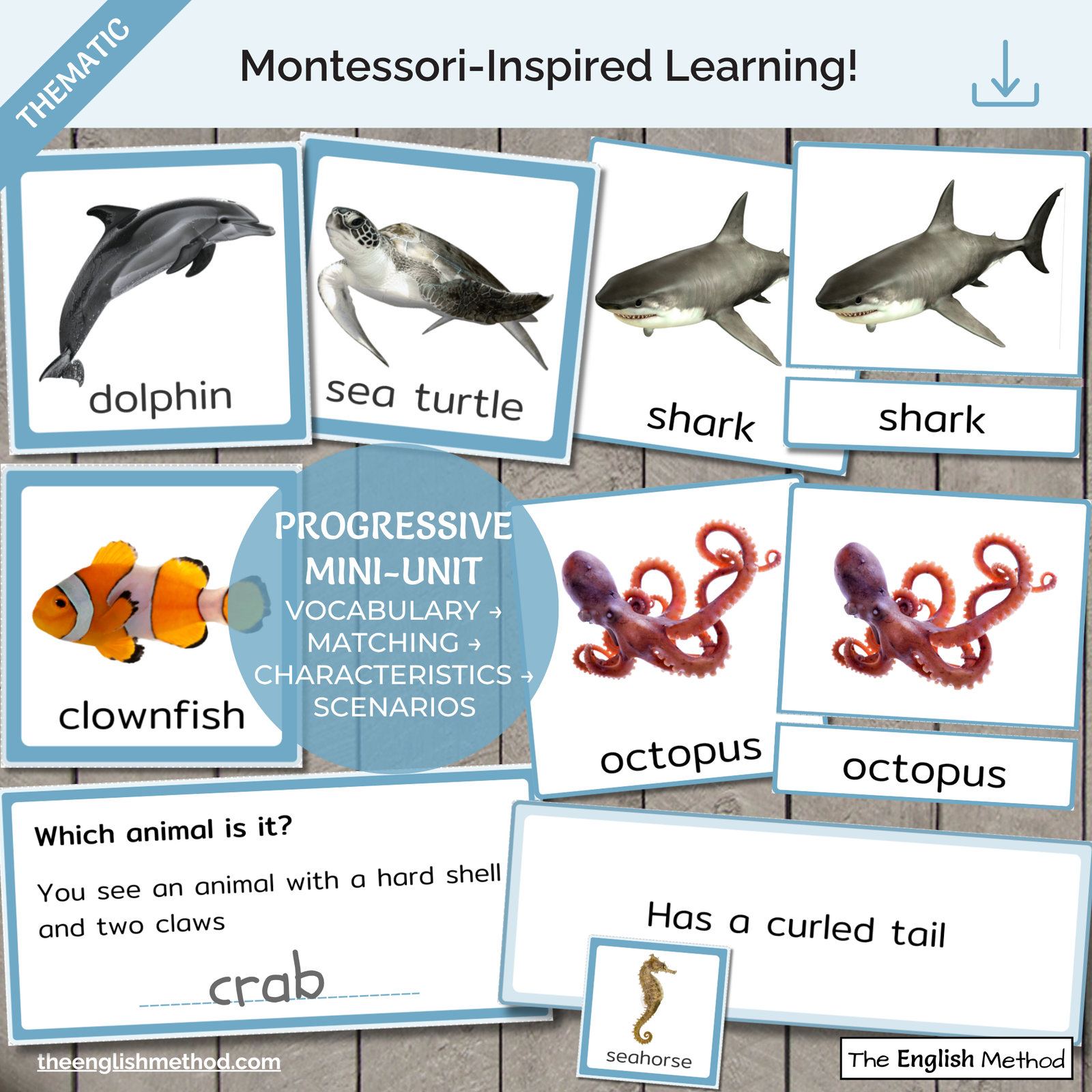
Build ocean animal vocabulary, early science understanding, and reading skills with this comprehensive Ocean Animals Study unit. Children explore a wide range of ocean animals through layered, hands-on activities that move from naming and recognition to understanding visible characteristics and real-world observation.
This Montessori-inspired unit includes vocabulary cards, 3-part cards, characteristics cards, and scenario cards designed to support independent learning, language development, and early science thinking. Children build confidence as they identify animals, match words to images, and use visual clues to recognise different ocean animals.
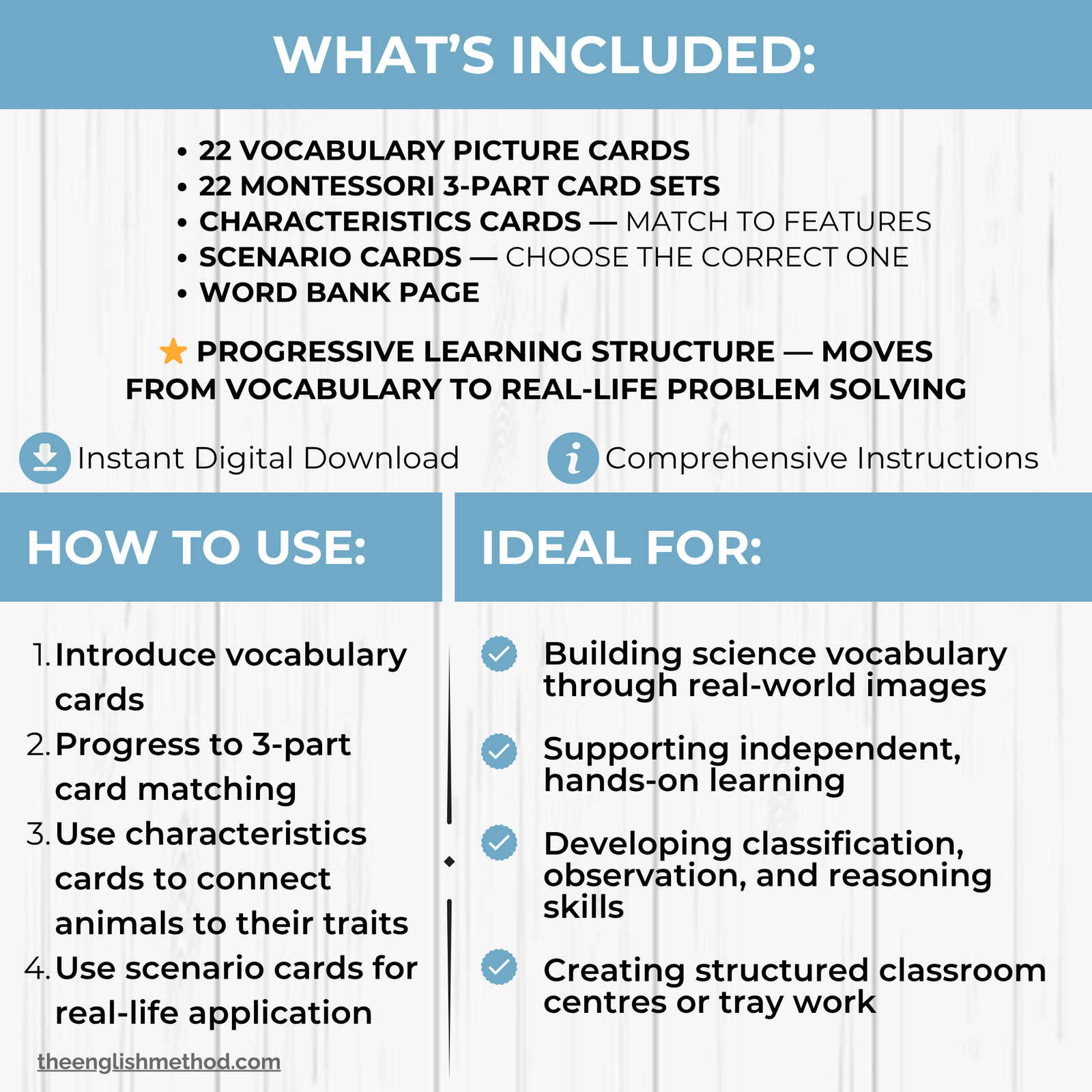
WHAT’S INCLUDED:
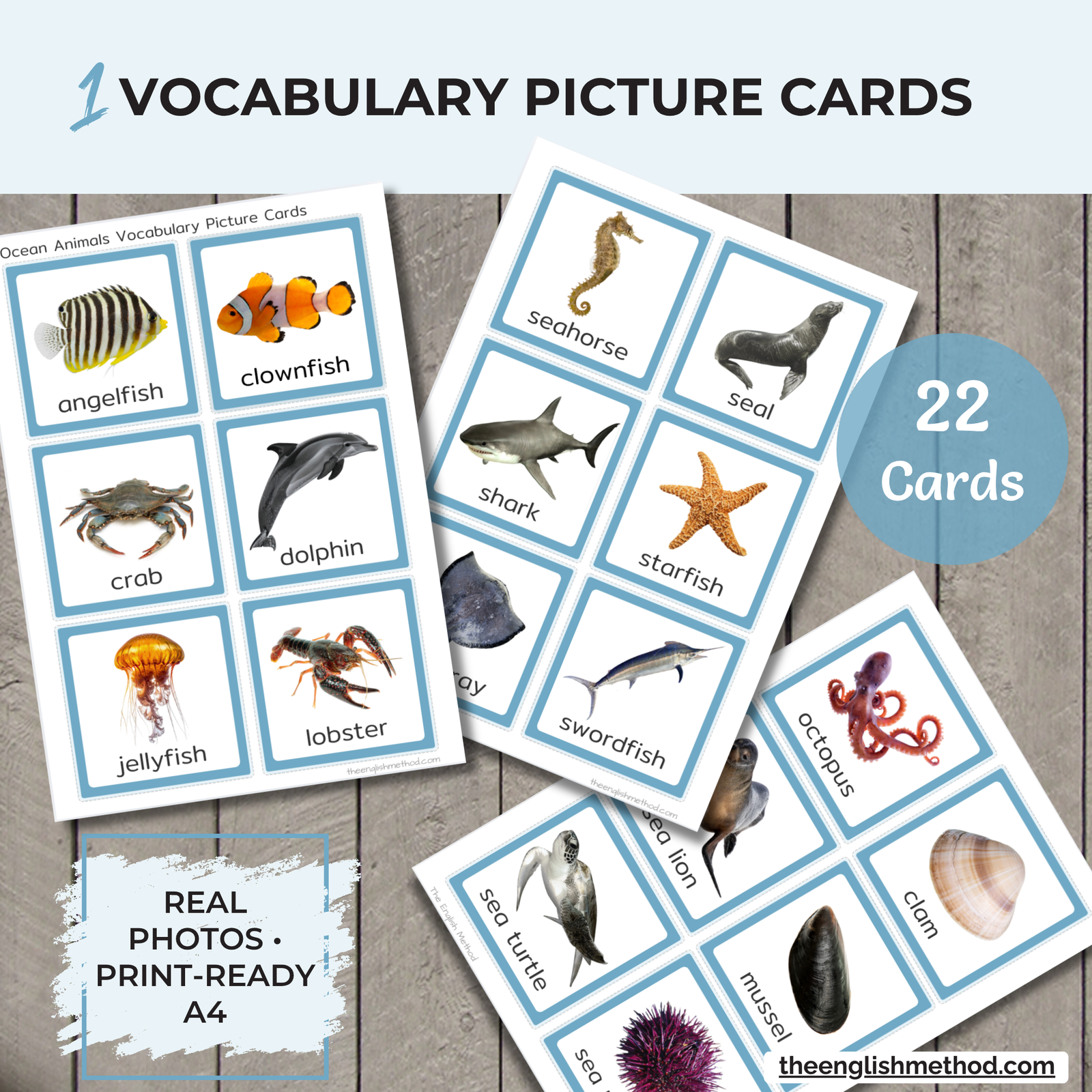
- 22 Vocabulary Picture Cards
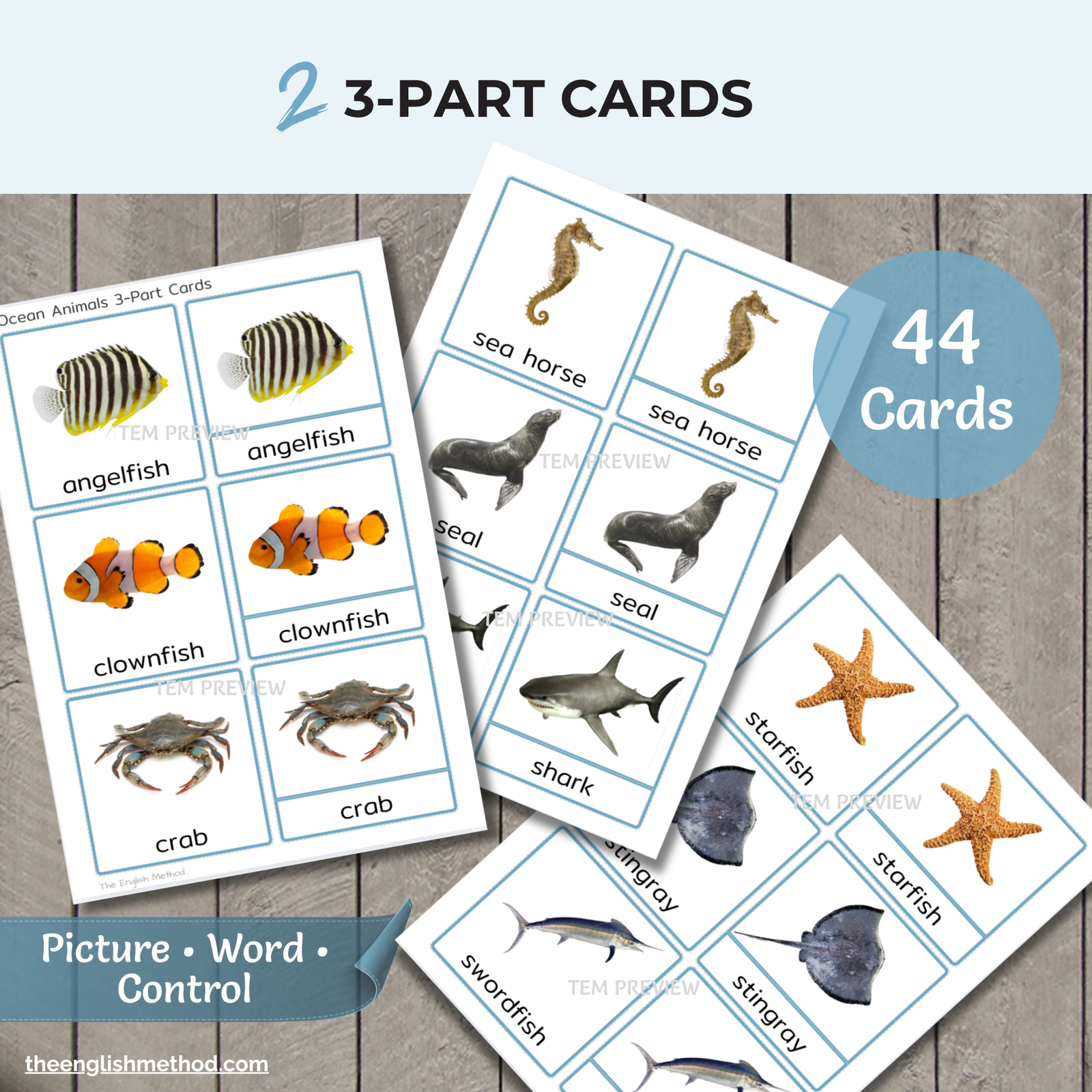
- 22 Montessori 3-Part Card Sets
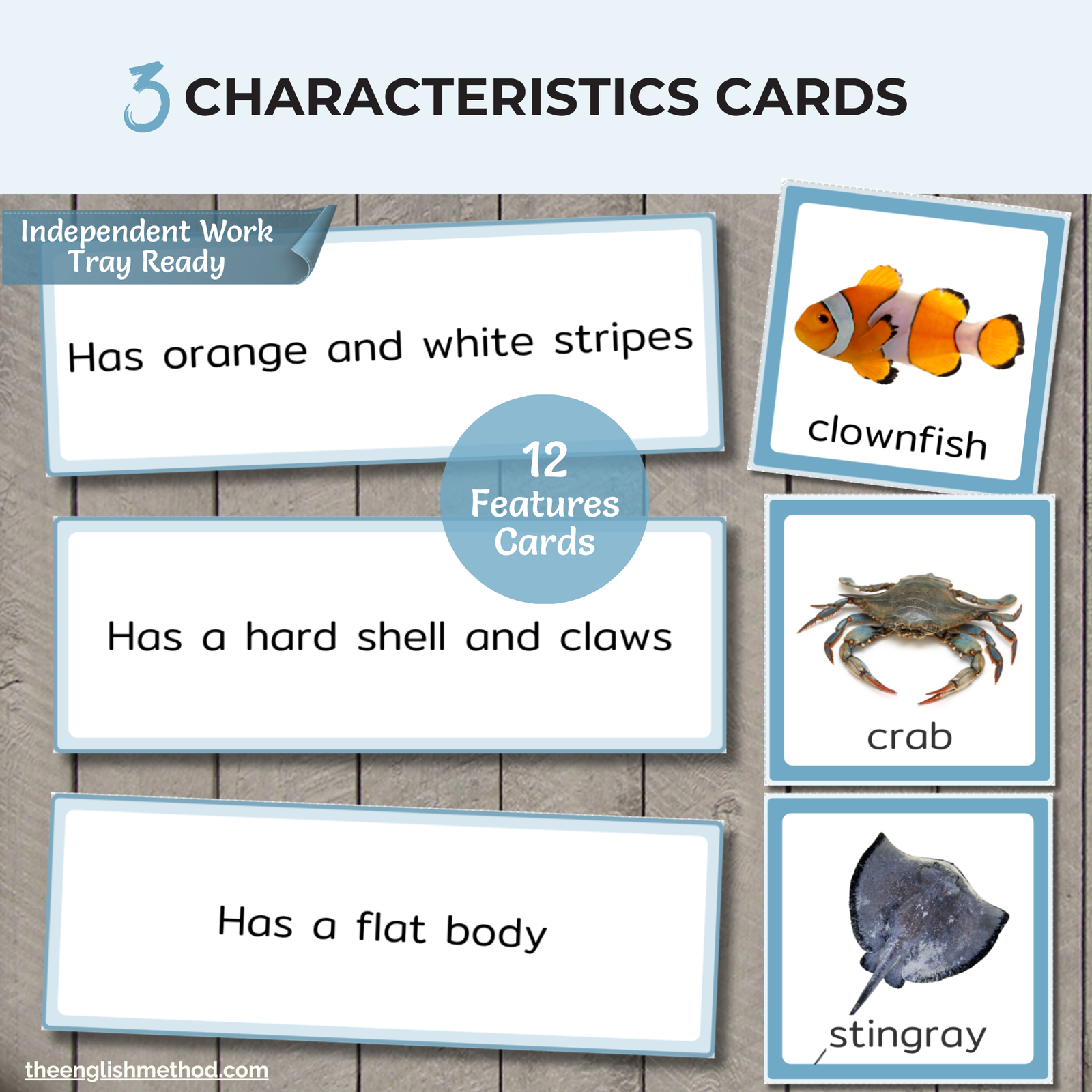
- Characteristics Cards — match animal to features
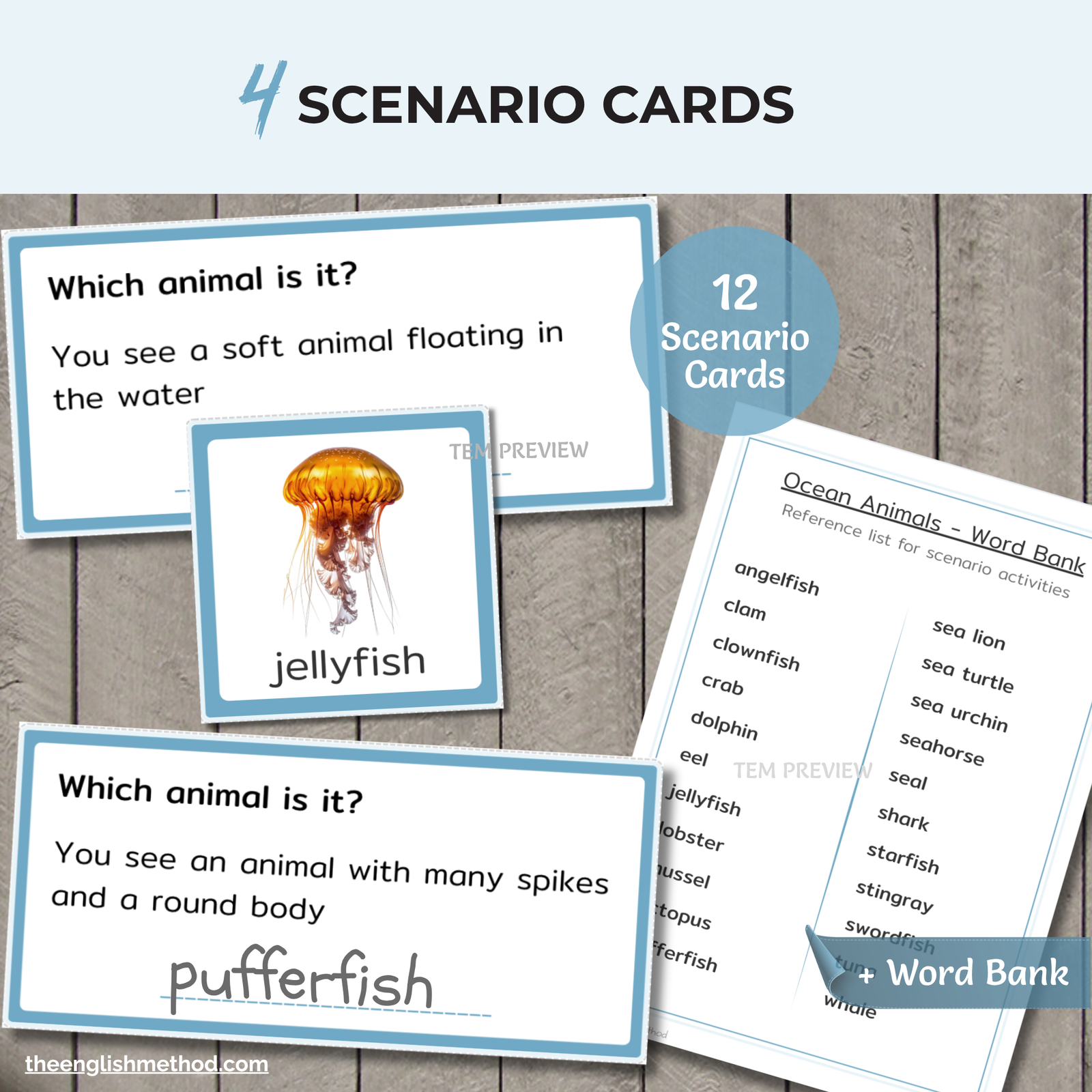
- Scenario Cards — identify the animal from clues
- Word Bank Page
- Step-by-step instructions
- Digital PDF download
OCEAN ANIMALS INCLUDED:
angelfish, clam, clownfish, crab, dolphin, eel, jellyfish, lobster, mussel, octopus, pufferfish, sea lion, sea turtle, sea urchin, seahorse, seal, shark, starfish, stingray, swordfish, tuna, whale
HOW TO USE:
- Download and print the materials
- Prepare cards (cut and laminate for durability)
- Introduce vocabulary using real images
- Use materials for matching
- Use materials for classification
- Use materials for simple problem-solving
- Encourage children to work independently once familiar
IDEAL FOR:
- Learning ocean animal vocabulary and early science concepts
- Building word-picture connections and early reading skills
- Developing ESL / EAL vocabulary through real images
- Practising independent matching and reasoning
- Exploring ocean topics, marine life, and underwater environments
KEY FEATURES:
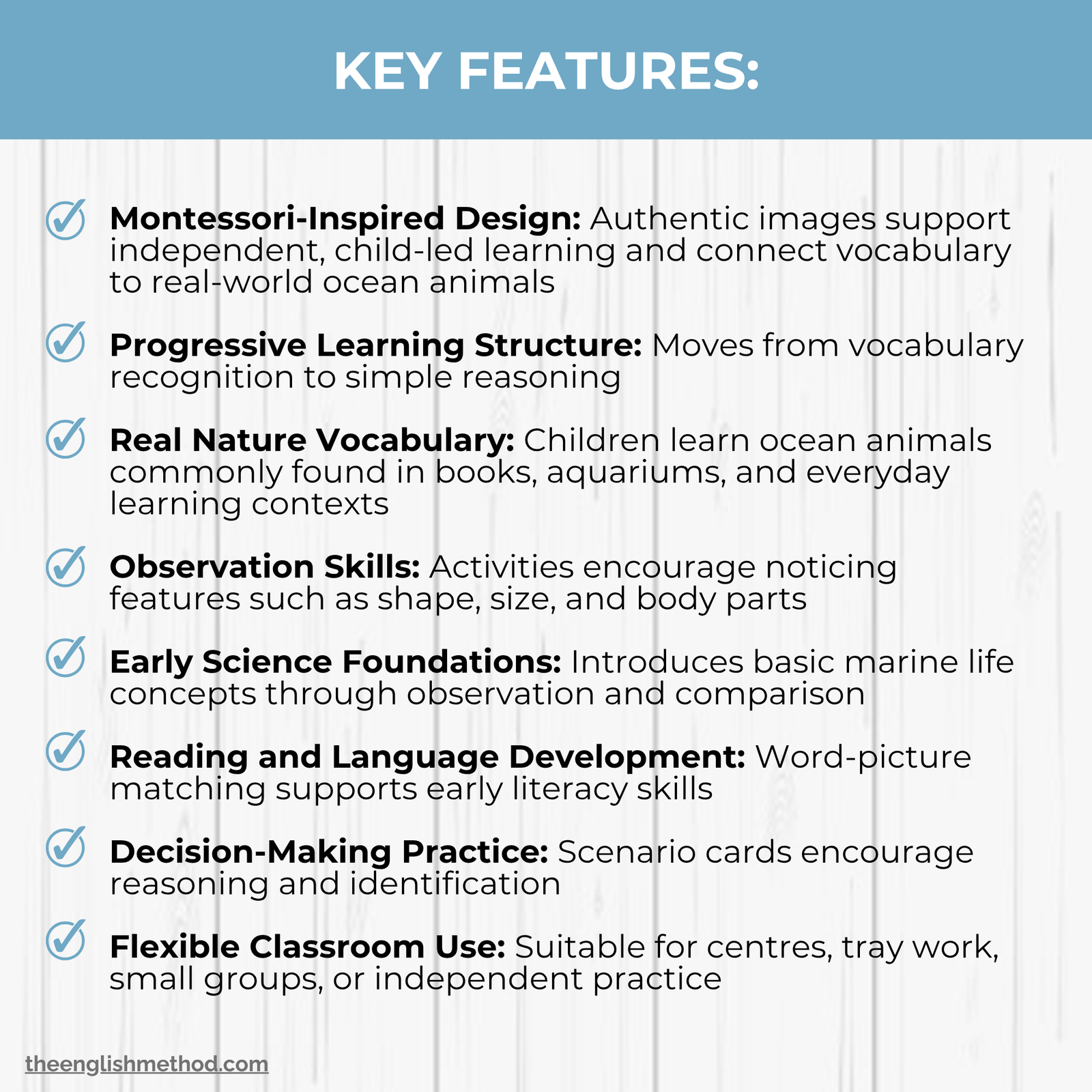
- Montessori-Inspired Design: Authentic images support independent, child-led learning and connect vocabulary to real-world ocean animals
- Progressive Learning Structure: Moves from vocabulary recognition to simple reasoning
- Real Nature Vocabulary: Children learn ocean animals commonly found in books, aquariums, and everyday learning contexts
- Observation Skills: Activities encourage noticing features such as shape, size, and body parts
- Early Science Foundations: Introduces basic marine life concepts through observation and comparison
- Reading and Language Development: Word-picture matching supports early literacy skills
- Decision-Making Practice: Scenario cards encourage reasoning and identification
- Flexible Classroom Use: Suitable for centres, tray work, small groups, or independent practice
Perfect for ocean topics, marine life study, and early science learning, while building meaningful vocabulary through real-world connections.