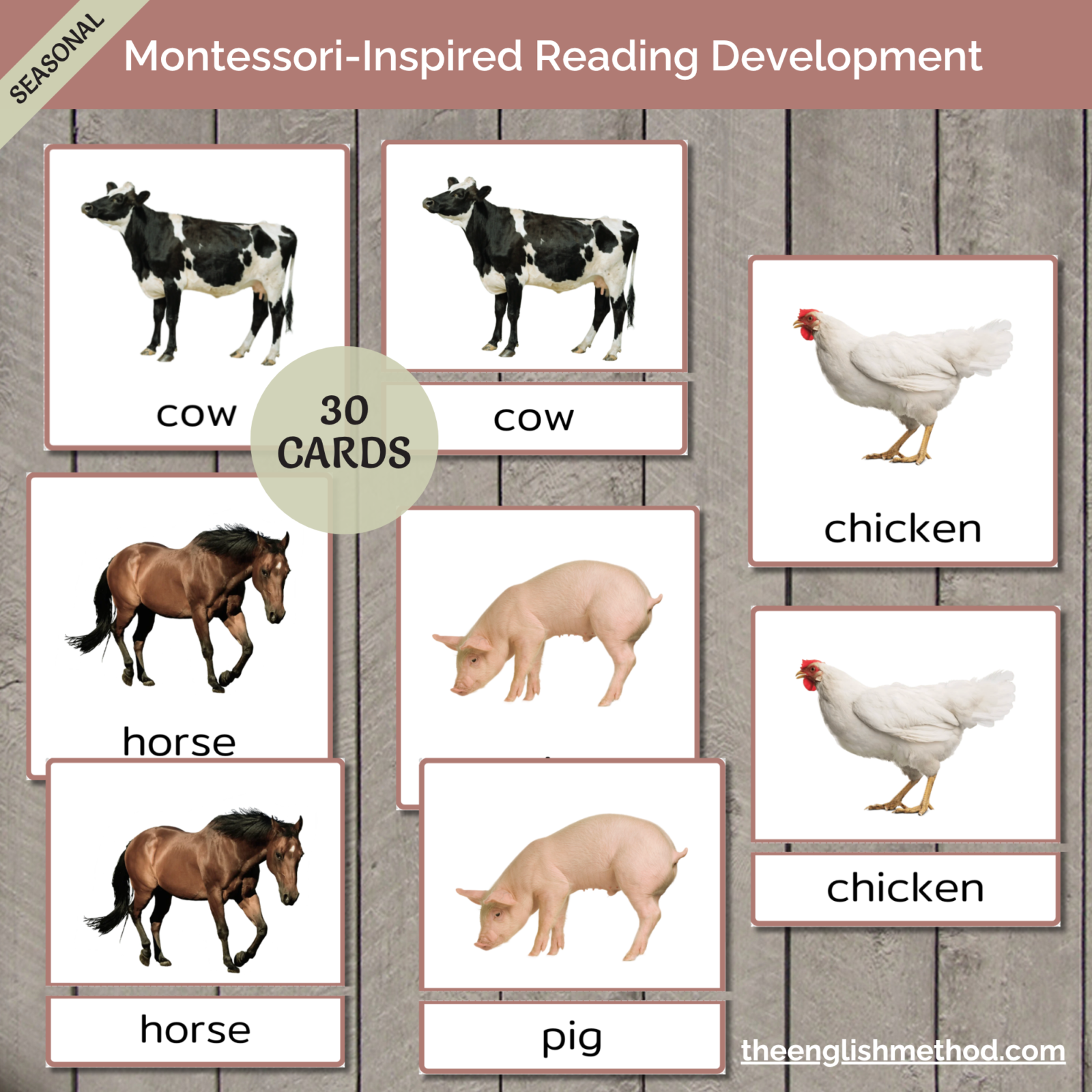
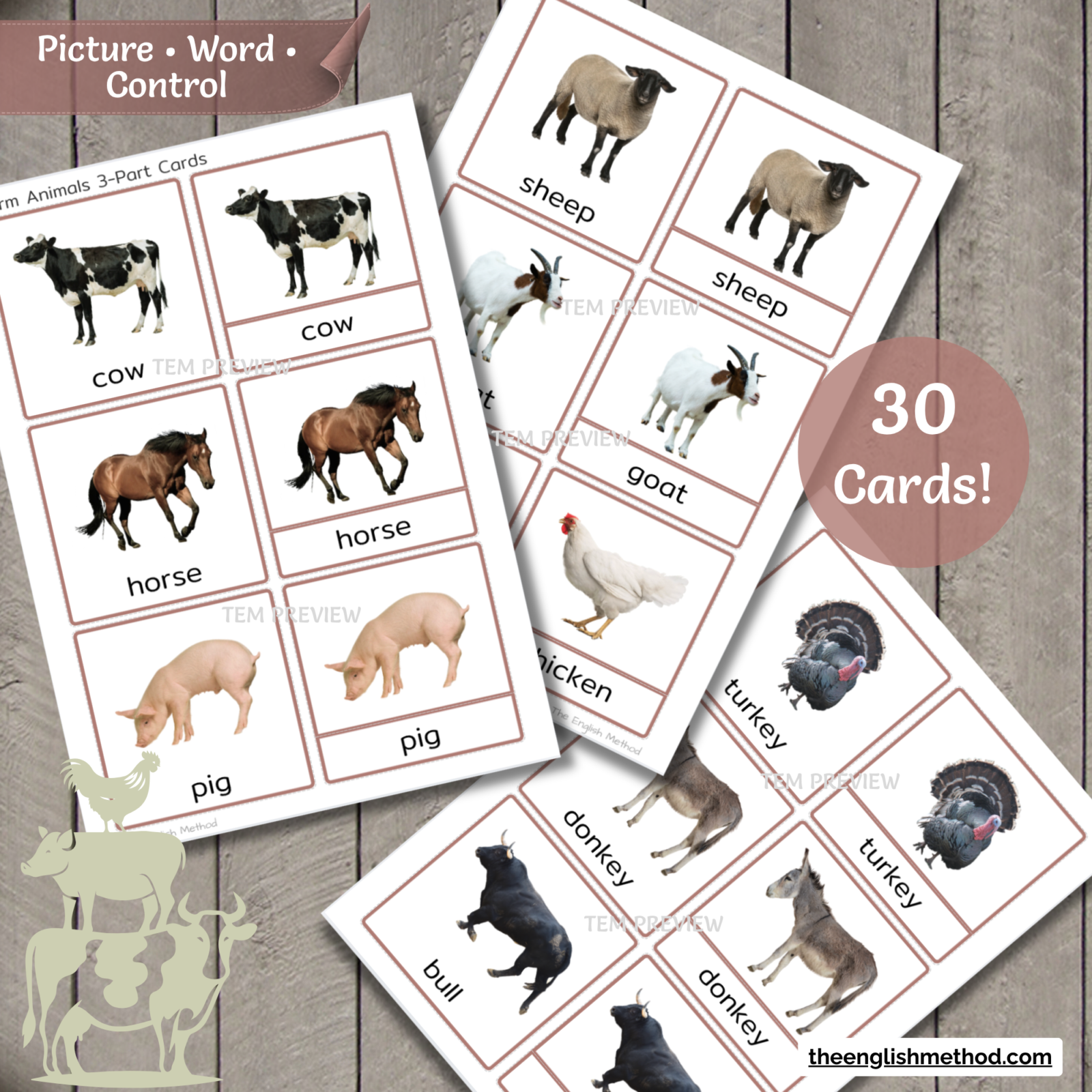
Build farm animal vocabulary and early reading skills with these Montessori-inspired farm animal 3-part cards. Children learn to recognise and read the names of familiar farm animals through hands-on matching activities that connect real photographs with printed words.
These nomenclature cards support language development, early reading, and farm-themed learning while encouraging independent Montessori work.
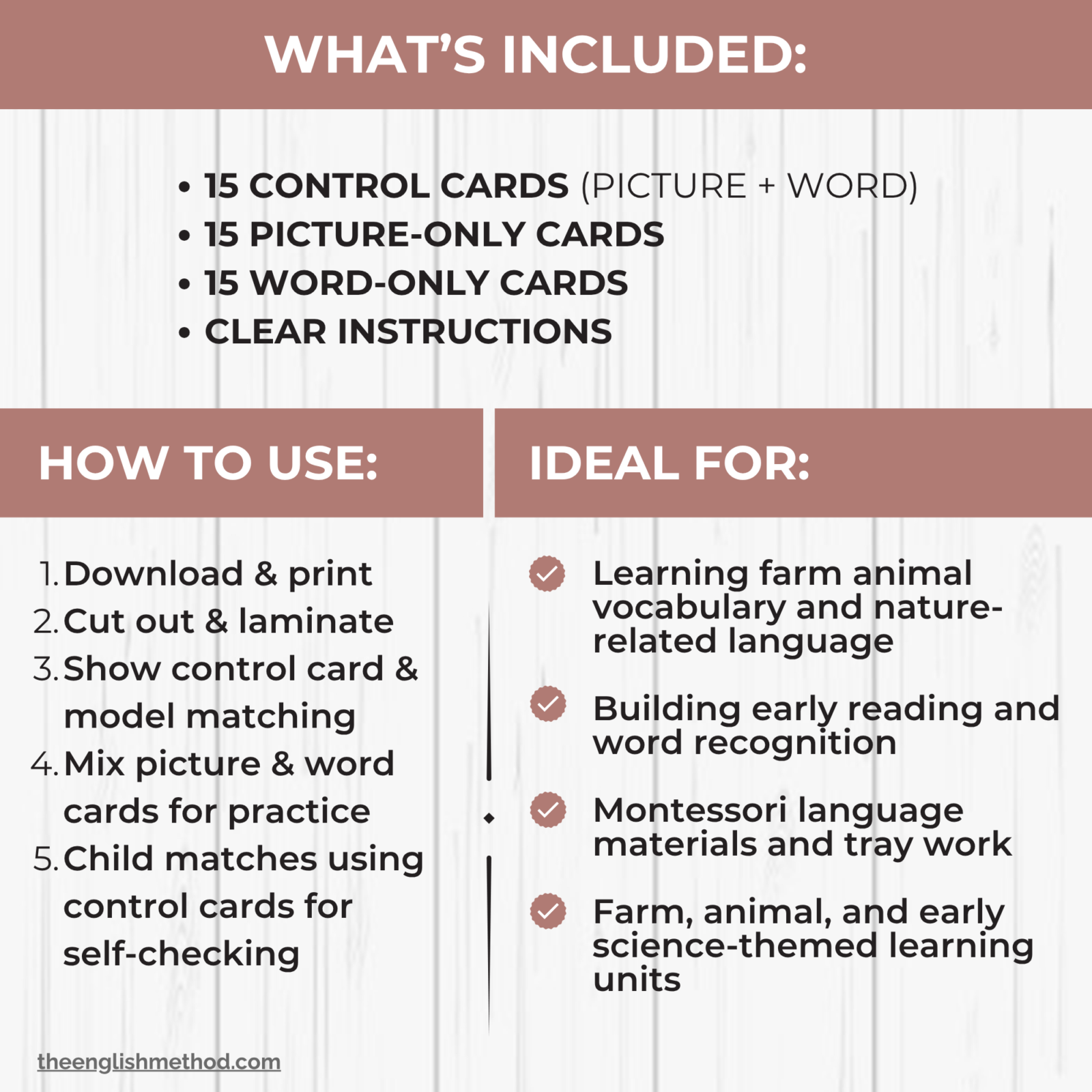
WHAT’S INCLUDED:
- 15 control cards (picture + word)
- 15 picture-only cards
- 15 word labels
- Step-by-step instructions
- Extension activity suggestions
- Digital PDF download
FARM ANIMALS INCLUDED:
bull, cat, chicken, cow, donkey, duck, goat, goose, horse, llama, pig, rooster, sheep, sheepdog, turkey
HOW TO USE:
- Show the control card (picture + word)
- Model matching the picture and word cards on top of the control card
- Mix picture and word cards for matching practice
- Child matches picture to word using control cards to self-check
- Store in a tray for independent work
PERFECT FOR:
- Learning farm animal vocabulary and nature-related language
- Building early reading and word recognition
- Supporting ESL / EAL learners
- Montessori language materials and tray work
- Farm, animal, and early science-themed learning units
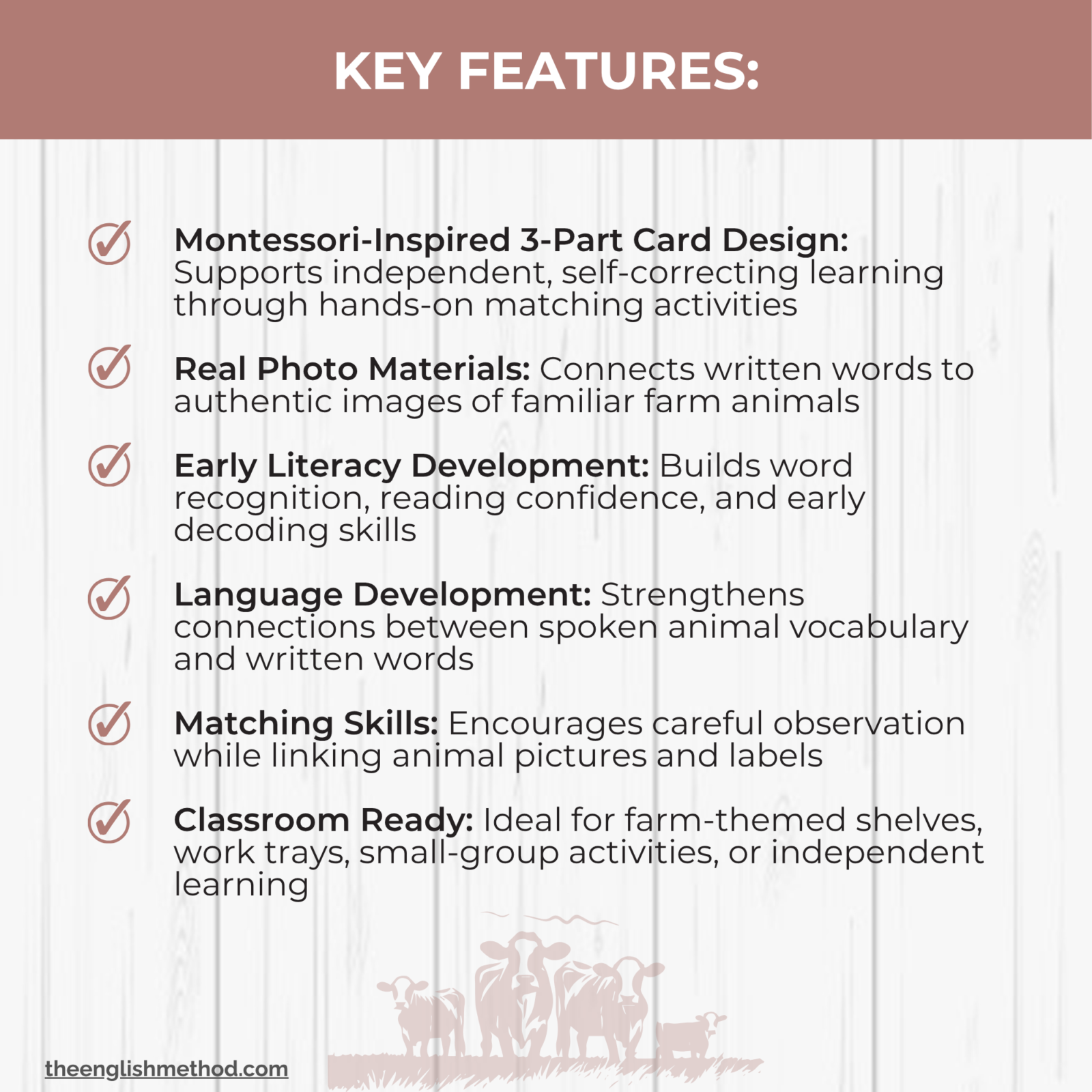
KEY FEATURES:
- Montessori-Inspired Design: Real photos support independent, child-led learning through self-correcting 3-part card activities
- Real-World Vocabulary: Children learn to recognise and read the names of familiar farm animals using authentic photographs
- Reading and Language Development: Word-picture matching strengthens early literacy skills, vocabulary, and reading confidence
- Observation Skills: Encourages careful observation while comparing animal features and matching pictures with words
- Early Science Foundations: Supports early science learning by introducing a variety of farm animals through real-world images
- Flexible Classroom Use: Suitable for centres, work trays, farm-themed shelves, small groups, or independent practice